

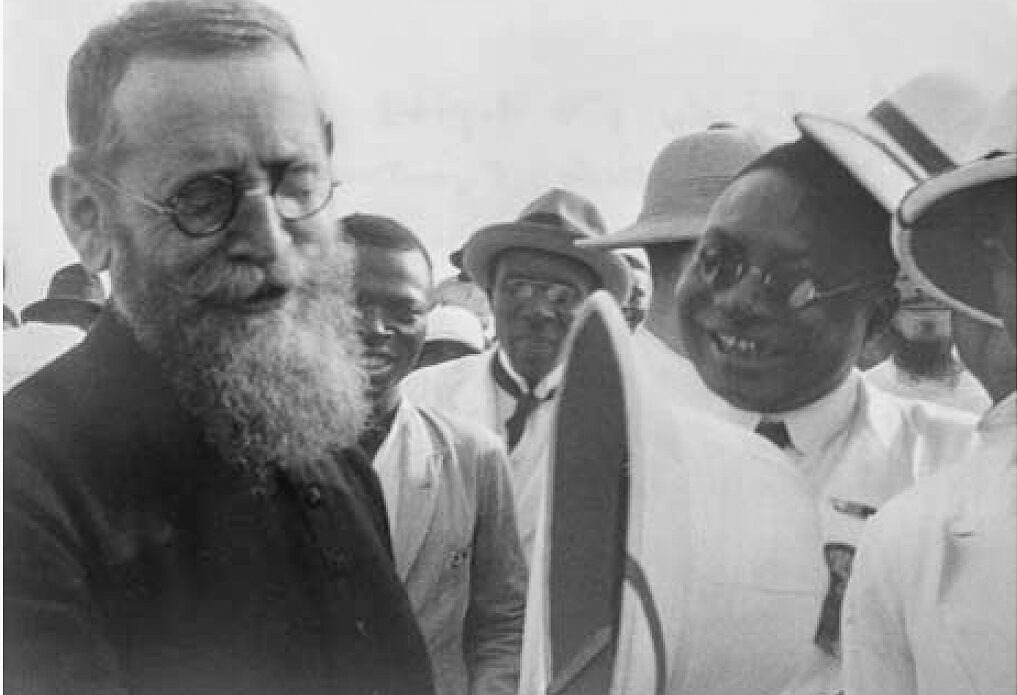
At the start of the mission, knowledge of the local populations
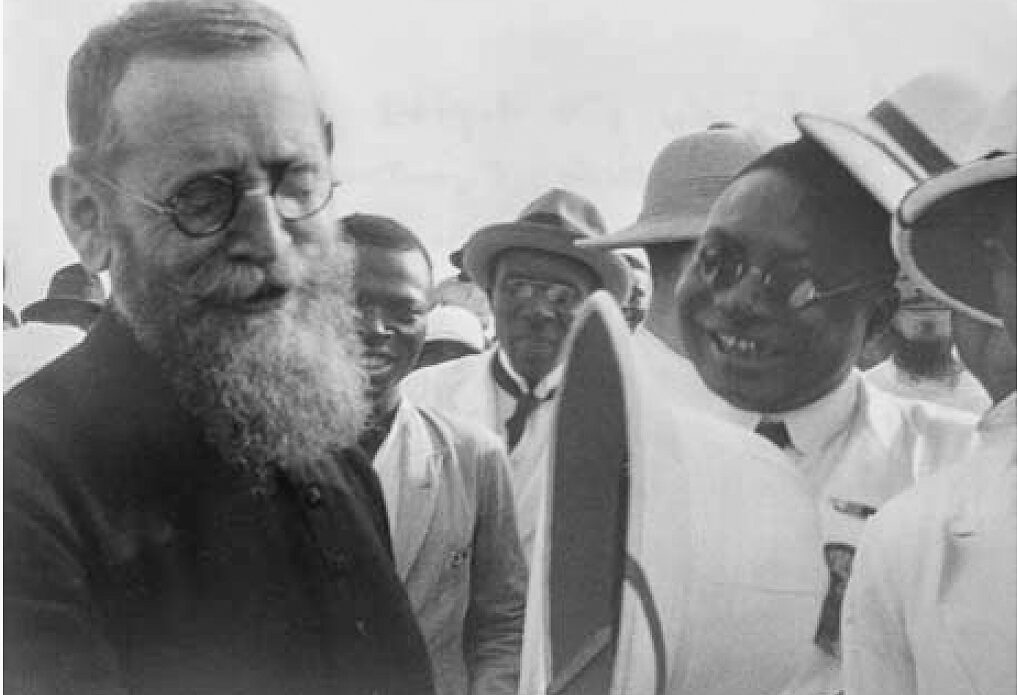 The arrival of Father Francis Aupiais in Porto-Novo on January 4, 1930.© SMA
Written by Claude Prudhomme, historian and professor at Lumière Lyon 2 University, on March 26, 2026
Missionary archives are an exceptional resource for understanding both the history of the missions and that of the societies they encountered. Spanning ethnography, linguistics, and accounts of daily life, these sources offer a unique perspective on the encounter between cultures. Today, they open up a vast field of research that remains largely unexplored.
The writings of those involved in the mission, preserved in the archives of both male and female institutes, remain an underutilized documentary resource despite the considerable progress made in recent years. The widespread opening of these collections, sometimes accompanied by websites (such as IRFA), has made them much more accessible to researchers. This has enabled numerous studies based on manuscripts, artifacts, photographs, films, and, in some cases, recordings. But the bulk of the work remains to be done, particularly regarding the women’s institutes. Missionary sources are also of exceptional interest for the history of the populations targeted by the mission, for understanding their languages, and for studying their societies, beliefs, and industrial and artistic productions. Closer to the ground than colonial and state archives, they offer a means of understanding how civilizations come into contact. They provide concrete insights into the nature of these encounters, the obstacles, conflicts, and misunderstandings. They offer abundant testimony to the daily lives of these populations, particularly those overlooked by conventional sources, such as the diaries of the Little Sisters of Jesus, who have chosen to live in the heart of the peripheries since 1939.
Ethnography in the Service of the Mission
The archives preserve an impressive collection of accounts, correspondence, reports, and personal diaries or daily journals kept by mission stations. Some letters were published under the title Edifying and Curious Letters by the Jesuits beginning in the 18th century, a tradition continued by the Paris Foreign Missions Society and the Annals of the Propagation of the Faith in the 19th century. Others have been reproduced in numerous missionary journals, some of which have been digitized by the BNF (Gallica website). However, these have been selected, or even rewritten or expurgated, and do not reflect the richness of the originals, as demonstrated by the work undertaken by the Marist Fathers. Under the title Letters Received from Oceania by the General Administration of the Marist Fathers during the Generalate of Jean-Claude Colin, 2009, Charles Girard published nine volumes containing the 1,365 letters written between 1836 and 1854. The White Fathers have transcribed and posted online the Quarterly Chronicles (1879–1909), intended to keep all members informed of their confreres’ activities. “Extensive excerpts from the journals kept by the missionaries in their missions or during their travels, as well as historical, archaeological, linguistic, and ethnographic notes, make these Chronicles a unique source for the study of Africa during that period.” The printed documents therefore represent only a tiny fraction of the entire collection.
To fully appreciate the richness of these texts, readers must make an effort not to dismiss them out of hand simply because the vocabulary used (Negroes, savages, infidels, pagans, idols…), the judgments, or the comments no longer reflect our own views. Through the evolution of the words used and the interpretations, we witness the emergence of a more neutral and scientific approach to societies, gradually shifting from a simple description of populations (ethnography) to a desire to understand them from their own perspective, setting aside prejudices as much as possible (anthropology).
Missionaries and Anthropologists
The goal of missionary anthropology at the beginning of the 20th century was to place science at the service of the mission ad gentes. It is undoubtedly this concern that has aged the worst, particularly when it attempts to justify the mission by disparaging its recipients. And professional anthropologists have long criticized missionary literature for being too dependent on pastoral goals and conversion strategies to have significant ethnographic value. But this has not prevented them from recognizing that it contains a wealth of irreplaceable information, including anecdotes that reveal realities otherwise inaccessible, particularly regarding isolated or marginalized populations. Scholars’ condescension toward missionary work has thus gradually given way to collaboration, leading to recognition of the importance of the missionary contribution—and even its pioneering nature during certain periods.
Among the figures of missionary anthropologists, we will mention just three. Francis Aupiais (1877–1945), a member of the Society of African Missions in Lyon, gained international renown between the two world wars for his work on the religions of Dahomey (Benin). Highly representative of the generation that discovered scientific ethnology, he founded the journal *La Reconnaissance Africaine* in 1925 and published ethnographic studies conducted by Africans. He took courses in ethnology in Paris and designed a teaching program that included the study of Dahomey folklore, songs, proverbs, and sculpture. In 1929–1930, he collaborated on the major project of patron Albert Kahn, “Les archives de la planète.” He directed the production of a film dedicated to the mission and facilitated the first ethnographic film on Voodoo ceremonies, *Le Dahomey religieux*. His initiatives, deemed too bold by some colleagues, led to his recall to France before his institution recognized the legitimacy of his approach. Yet he remained on the fringes of academic anthropology, which he criticized for its secularist biases.
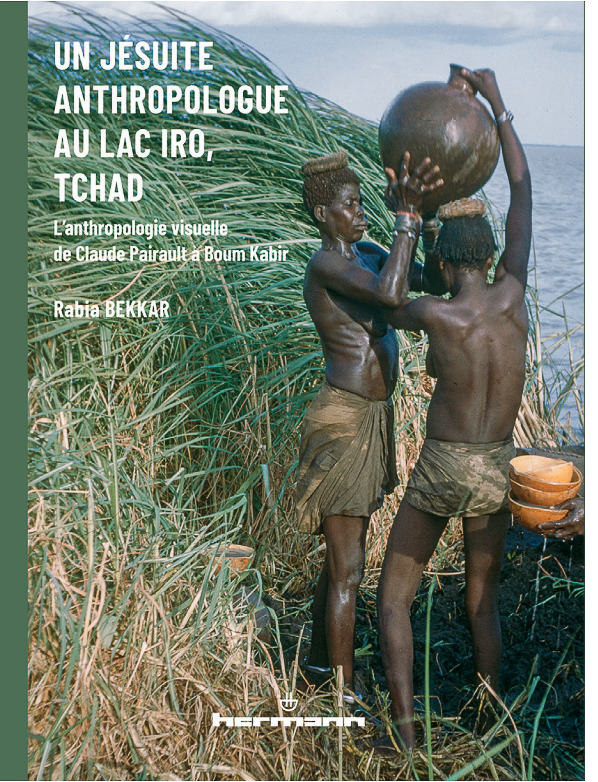
In the next generation, Jacques Dournes (1922–1993) is well known within the Paris Foreign Missions Society for his extensive work on the peoples of the Vietnamese highlands. This work earned him a position at the CNRS and has now led to the launch of a website at the IRFA. He can be compared to the Jesuit and ethnologist Claude Pairault (1923–2002), a professor and researcher at the universities of Abidjan, Ouagadougou, and Yaoundé. In an autobiographical work, he explained how he reconciled his professional and spiritual paths. In his preface, anthropologist Jean Benoist expresses his astonishment and admiration for the successful reconciliation of two identities that seemed to be at odds: “To those who know you poorly, it seems as though two biographies coexist. One is that of a priest who never pushed his chosen religious life and identity into the background. The other is that of an ethnologist who joined the CNRS and then went on to academia.”
No catechesis without translation
The missionary contribution to the study of languages is an excellent illustration of the fruitfulness of these collaborations between mission and science. As early as the Middle Ages, we see systematic efforts to codify and disseminate a national language (Gaelic in Ireland), if necessary by developing specific alphabets (languages written in Cyrillic script spread by Cyril and Methodius and their disciples). With the birth of modern missions in the 16th century, a systematic effort to study the languages of the Native Americans began. In doing so, the missionary gradually discovered the challenge of any translation into a local language. The task is not very difficult when it comes to the names of historical figures or places; it suffices to give them a phonetic form adapted to the local language. The situation is different when it comes to concepts, starting with how to refer to God, the Trinity, and dogma, etc. The translator may adopt a term they consider equivalent in the local culture. But isn’t there a risk of Christianity being contaminated by meanings derived from traditional usage? Others will attempt to propose a new term, highlighting the novelty of the Christian message, but neologisms risk being incomprehensible to the population.
We are aware of the difficulties caused in China by the differing terms used to refer to God in Catholicism (Tianzhu, “Lord of Heaven”) and Protestantism (Shen, “Supreme Spirit”; Tian, “Heaven”; or Shengdi, “Sacred Sovereign”). In late 19th-century Vietnam, the Apostolic Vicar of Tonkin’s proposal to replace the term chosen to translate “Holy Spirit” (Phirigto Sangto) with the term used in ancestor worship to refer to spirits (Than) was rejected out of fear of syncretism. Carlo Zappa, an Italian missionary of the S.M.A. in Igbo country (Nigeria), sent the texts he had translated to Rome in 1899 for approval: the sign of the cross, the Hail Mary, the Lord’s Prayer, the Creed, and the Commandments of God and the Church. He explained his choices—made via Latin—to a Roman consultant who, of course, knew nothing of the Igbo language, in order to obtain permission to publish his translations. It turns out that every word in the Creed posed a problem.
Translation thus proves to be a delicate, risky, yet necessary undertaking. Protestants have made it a top priority through the Universal Bible Alliance. In 2014 alone, it claims to have completed Bible translations into 51 languages spoken by more than 1.3 billion people (1.2 billion Chinese speakers and 146 million speakers of other languages). The list of early lexicons, dictionaries, and grammars compiled by missionaries is impressive but often remains merely a carefully preserved heritage, unused as a source for the history of languages and Christianity. The arrival in the academic world of researchers who are native speakers of these languages in Africa, Asia, and the Pacific should help advance this still largely unexplored field.
Areas for Further Research
One senses the vast scope of the field to be explored and the significance that Catholic and Protestant linguistic works continue to hold today for the populations concerned. The Vietnamese are aware of the role played by certain Jesuits, including Alexandre de Rhodes, in the creation of a Vietnamese national script. The Chinese recognize the role of the Jesuit Matteo Ricci (1552–1610) in the origins of Sinology. But this contribution extends to many other countries. In Madagascar, after a few clergymen transcribed Malagasy into the Latin alphabet in the 17th century, it was Protestant missionaries who established its current spelling in the 19th century. In Nigeria, missionaries were the first to collect and transcribe oral literature at the end of the 19th century.
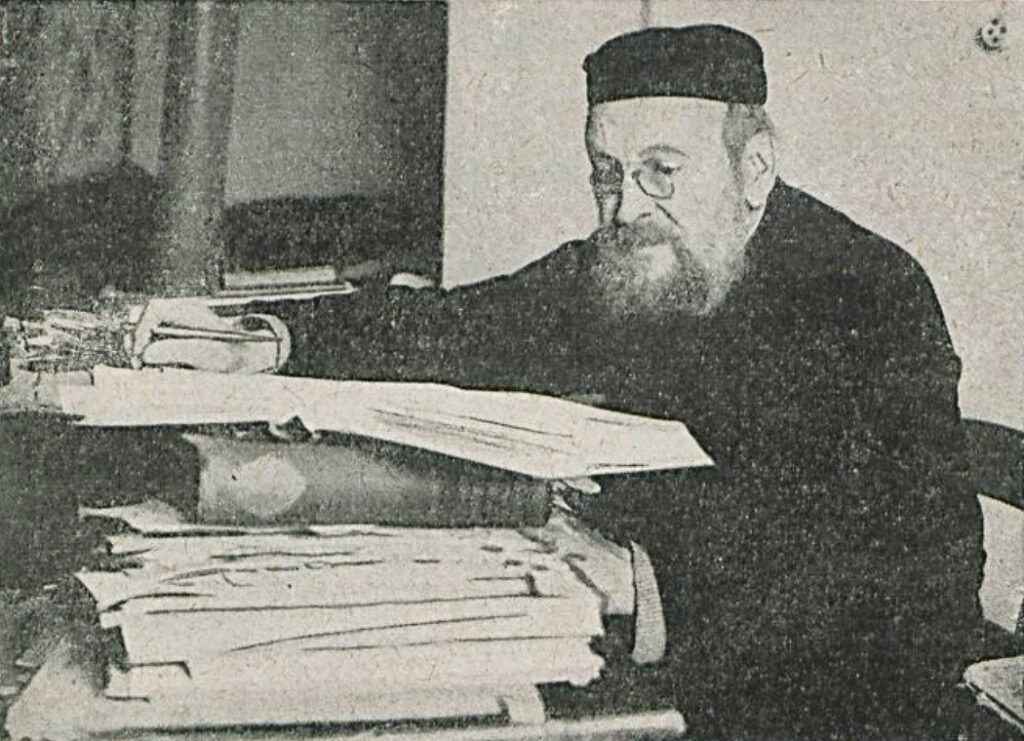
In East Africa, the Spiritan Charles Sacleux (1856–1943), first from Bagamoyo and later from Paris, compiled a monumental Swahili-French dictionary. “It remains the standard reference for Swahili scholars to this day.” Throughout the region, Protestants and Catholics have compiled catechisms preserved in archives, which represent experiences of inculturation that are largely unexplored yet fundamental. These translations have also helped save minority languages—even very small ones—from extinction, as they are now written and printed.
Most of this catechetical material awaits systematic study, for example in Paris, in the archives of the IRFA and the Spiritans (a catalog of 408 catechisms), and in Rome in the very rich collection (hundreds of catechisms) of the library of the Urbaniana University.