

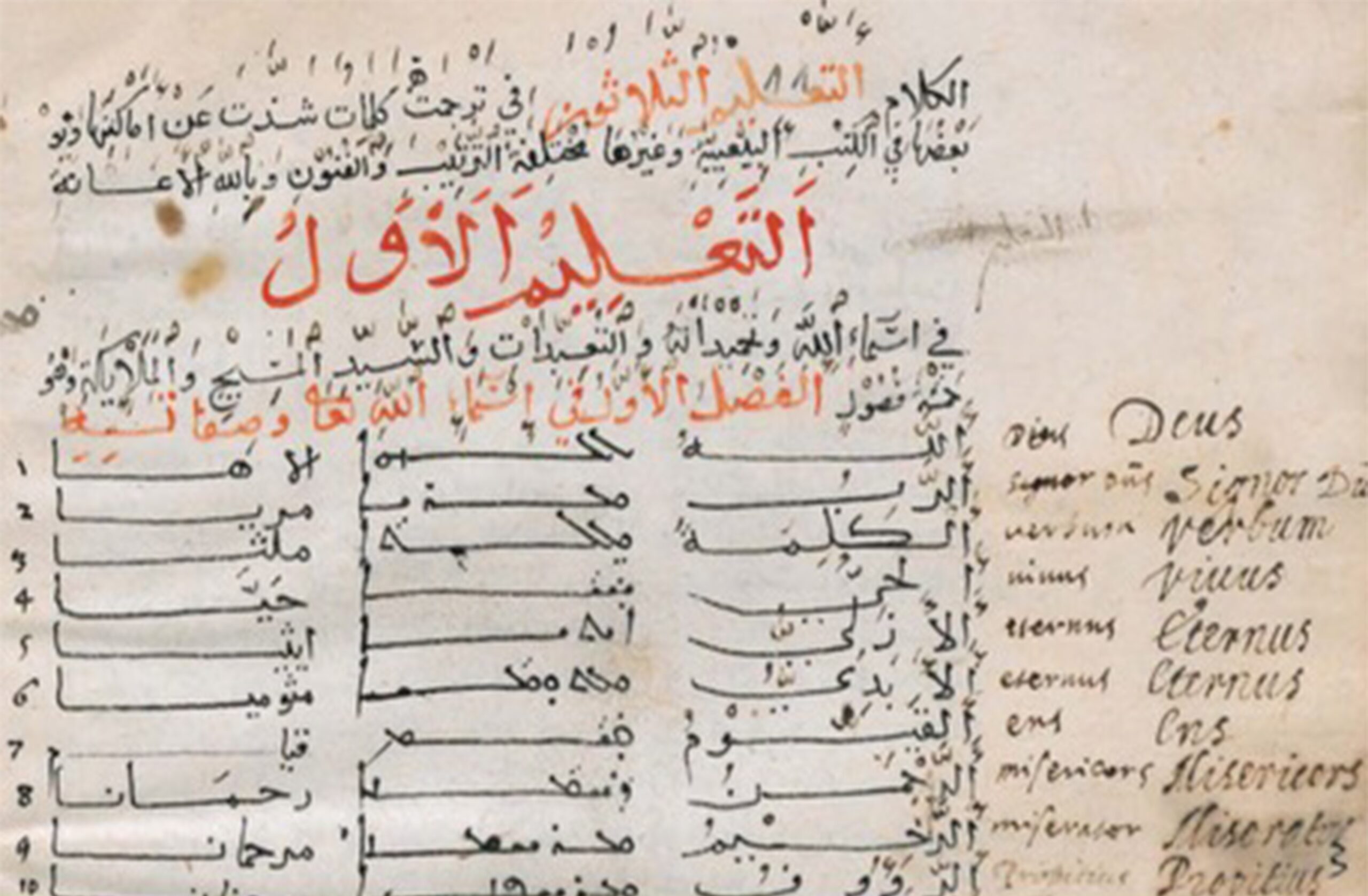
MEPs and Undocumented Languages in “Documenter et décrire les langues d’Asie : histoire et épistémologie”
Documenting and Describing the Languages of Asia: History and Epistemology
Proceedings of the Conference of the Society for the History and Epistemology of Language Sciences, Paris, January 26–28, 2022
Edited by Émilie Aussant and Fabien Simon
The Société d’histoire et d’epistémologie des sciences du langage (SHESL) has published the proceedings of a conference titled “Documenting and Describing Asian Languages: History and Epistemology,” which, among other topics, addresses the contact between MEPs and undocumented languages, as discussed in the chapter by Thị Kiều Ly Phạm: Pour une histoire de la grammaire et de l’écriture romanisée du bahnar
The publication is available online at OpenEditions.
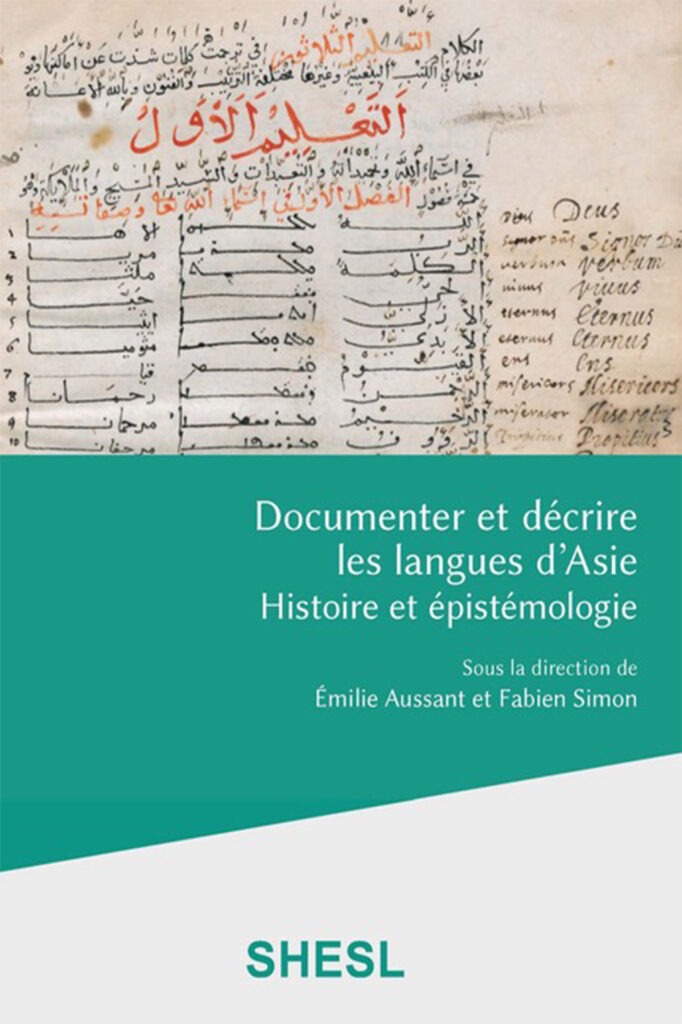
Publisher’s description :
Based on a symposium organized by the Society for the History and Epistemology of Language Sciences, this volume examines, from a historical and epistemological perspective, the documentation and description of Asian languages. The term “Asia” is used here in the broad sense given to it by the Asian Society, that is, to denote a region stretching from the Maghreb to the Far East, the boundaries of which must also be examined from a linguistic perspective. As for the linguistic activities under consideration, they include, on the one hand, the collection of linguistic data in all its forms (word lists, the creation of archives and collections, linguistic surveys, questionnaires, corpora, etc.) and, on the other hand, the development of tools for representing a language, either synchronically or diachronically: writing systems, grammars, dictionaries, lexicons, translation tools, textbooks, etc.
At the heart of these reflections, therefore, is a detailed analysis of linguistic knowledge produced, both within and outside Europe, regarding Asian languages, with particular attention paid to the contexts of production and circulation of this knowledge. We thus address the contribution of indigenous traditions to the process of grammatization, Asia’s role in global language comparison projects, and, among other topics, the materiality of descriptions (translations, printed materials, etc.).